



Medical Vacuum Plant
Medicabay Healthcare Systems introduces Medical Vacuum Plants, engineered to provide a reliable central vacuum (aspiration) supply to hospitals. Our systems are designed to meet the demanding needs of modern healthcare environments, ensuring smooth operations in critical areas such as Operating Rooms, Intensive Care Units, and Patient Rooms, thus supporting optimal patient care and safety.
Table of Contents
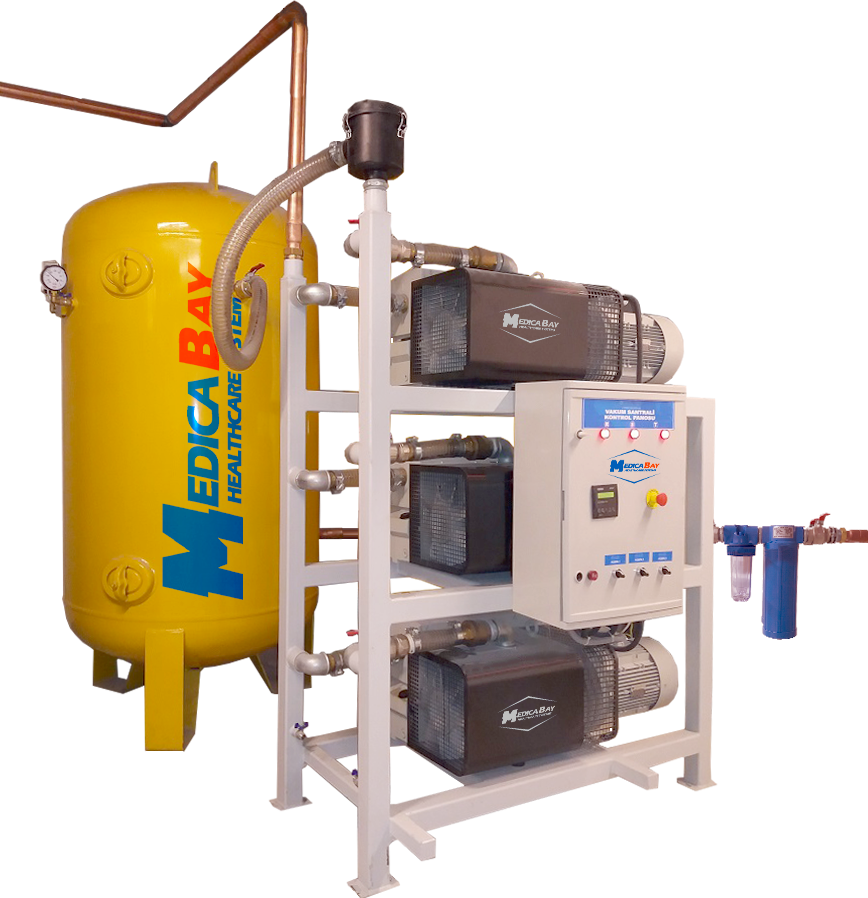
Built to run unattended: Medical vacuum plant engineering
Engineered for continuous hospital suction in critical surgical theatres, intensive care suites, and emergency trauma wards.
Rotary Vane Vacuum Pumps
Heavy-duty oil-lubricated rotary vane pumps guarantee quiet continuous suction down to −600 mbar operating vacuum levels.
HTM 02-01 N+1 Redundancy
Plants deliver 100% of maximum hospital demand with the largest single pump shut down for routine servicing.
Dual Bacterial Filter Sets
Duplex antibacterial filters achieve 0.005% penetration efficiency, capturing infectious biological matter before pump intake.
Autonomous PLC Master Panel
Smart touchscreen PLC automatically alternates pump running hours, initiates cascade duty staging, and manages alarm logging.
Bacterial Drain Trap Jars
Transparent drainage flasks collect condensation and bio-residue, permitting safe sterilisation without system shutdown.
Vacuum Storage Reservoirs
Horizontal and vertical epoxy-lined steel vessels from 500 L to 8,000 L buffer surgical demand spikes effortlessly.
BMS & Alarm Integration
Volt-free contacts and isolated RS485 Modbus telemetry transmit line vacuum, motor trips, and service reminders to central BMS.
Complete Factory Skid Testing
Pre-wired and pre-piped modular packages undergo stringent vacuum decay leak testing before hospital site delivery.
Engineering showcase: Medical vacuum plant sub-assemblies
Factory manufactured medical gas pipeline equipment built to exacting British HTM and International ISO specifications.
Complete Skid Assembly
Pre-piped multi-pump skid with common suction header, isolation valves, and integrated master control cabinet.

Tank-Mounted Compact Unit
Space-saving configuration with duplex vacuum pumps positioned directly above the horizontal buffer vessel.

PLC Touchscreen Master Panel
Central intelligent controller managing equal run-hour alternation, sensor calibration, and BMS telemetry export.

Duplex Bacterial Filter Set
Dual parallel filter housings fitted with differential pressure gauges and autoclavable drain collection flasks.

Single Bacterial Filter Housing
Specialized HEPA grade filtration canister removing airborne infectious microorganisms from clinical suction lines.

Epoxy Vacuum Buffer Vessel
Internal rust-inhibiting epoxy coating prevents corrosion and ensures smooth continuous negative pressure reserves.
How the Medical Vacuum Plant works: Operating sequence
Continuous clinical suction generated at hospital terminal units passes through sterile filters and buffers into the central vacuum pump manifold.
Surgical Suction Collection
Clinical fluids and gases are drawn from patient terminal units into localized drainage jars across hospital wards.
Duplex Bacterial Filtration
Bio-aerosols pass through redundant HEPA grade filters, trapping airborne pathogens and liquid droplets safely.
Vacuum Vessel Equalization
Epoxy-treated buffer vessels store negative pressure, smoothing pipeline surges and reducing pump start cycles.
Exhaust Discharge to Atmosphere
Oil mist is eliminated by high-efficiency exhaust separators before safe atmospheric discharge away from air intakes.
Standards we build to: Global medical vacuum safety
Every Medicabay vacuum plant is engineered and factory tested in full compliance with international hospital healthcare codes.
Part A & Part B Design
Guarantees required pipeline diversity, minimum −600 mbar operating suction, and mandatory N+1 pump redundancy architecture.
Pipeline Safety Systems
Specifies continuous negative pressure maintenance, emergency bypass capability, and autonomous alarm switching.
Quality Management
Governs certified medical gas plant manufacturing, comprehensive traceability, and rigid factory quality controls.
Bacterial Retention
Validates high efficiency particulate air retention exceeding 99.995%, completely safeguarding hospital maintenance engineers.
How the Medical Vacuum Plant works: Operating sequence
Clinical suction flows continuously under negative pressure (−0.60 to −0.75 Bar) from surgical suites through sterile filters into central vacuum pumps.
Surgical Suction Collection
Clinical fluids and gases are drawn from patient terminal units into localized drainage jars across hospital wards.
Duplex Bacterial Filtration
Bio-aerosols pass through redundant HEPA grade filters, trapping airborne pathogens and liquid droplets safely.
Vacuum Vessel Equalization
Epoxy-treated buffer vessels store negative pressure, smoothing pipeline surges and reducing pump start cycles.
Exhaust Discharge to Atmosphere
Oil mist is eliminated by high-efficiency exhaust separators before safe atmospheric discharge away from air intakes.